Malleable Cast Iron Pdf
Gray cast iron. Easynote H5310 Drivers. Ductile cast iron. White cast iron. Malleable cast iron. Compacted graphite iron and. Alloy cast iron. The composition of cast iron (CI) varies significantly depending upon the grade of pig iron used in its manufacture. The mode and concentration of carbon in the CI is controlled to produce various. Of the more complex metallurgical systems. Iron-carbon alloys with less than. 2% carbon are metastable; the true stable system being iron-graphite (Fe-C). The general term cast iron includes pig iron, gray iron, malleable iron, chilled iron, white iron, and nodular or ductile iron. If an iron alloy exceeds about 2% car.
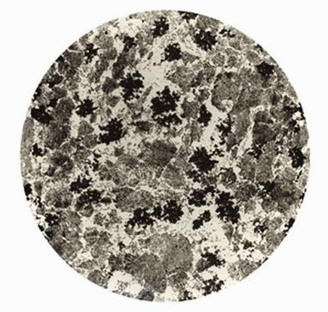
Of malleable iron at 100x magnification Malleable iron is cast as, the structure being a metastable carbide in a pearlitic matrix. Through an heat treatment, the brittle structure as first cast is transformed into the malleable form. Carbon agglomerates into small roughly spherical aggregates of graphite leaving a matrix of ferrite or pearlite according to the exact heat treatment used. Three basic types of malleable iron are recognized within the casting industry: blackheart malleable iron, whiteheart malleable iron and pearlitic malleable iron. Contents • • • • • History [ ] Malleable iron was used as early as the 4th century BCE, and malleable iron artifacts have been discovered by archaeologists between 4th century BCE and 9th century CE in China. By the, the use of malleable iron in China waned, although there are malleable iron artifacts dating to the 9th century. Malleable iron is mentioned in England in a patent dating to the 1670s.
Conducted extensive research on malleable iron in 1720. He discovered that iron castings which were too hard to be worked could be softened by packing them into or hammer slag and exposing them to high temperature for a number of days. Creating malleable iron began in the United States in 1826 when started a foundry for the production of harness hardware and other small castings. Castability, heat treating and post-casting operations [ ] Like similar irons with the carbon formed into spherical or nodular shapes, malleable iron exhibits good. Incorrectly considered by some to be an 'old' or 'dead' material, malleable iron still has a legitimate place in the design engineer's toolbox.
Malleable iron is a good choice for small castings or castings with thin cross sections (less than 0.25 inch, 6.35 mm). Other nodular irons produced with graphite in the spherical shape can be difficult to produce in these applications, due to the formation of carbides from the rapid cooling. Malleable iron also exhibits better fracture toughness properties in low temperature environments than other nodular irons, due to its lower silicon content.
The ductile to brittle transition temperature is lower than many other ductile iron alloys. In order to properly form the spherical-shaped nodules of graphite (called temper graphite nodules or temper carbon nodules) in the annealing process, care must be taken to ensure that the iron casting will solidify with an entirely white iron cross section. Wonderware Intouch 10.1 User Manual Pdf there. Thicker sections of a will cool slowly, allowing some primary graphite to form. This graphite forms random flake-like structures and will not transform to carbide during heat treatment.
Comments are closed.